
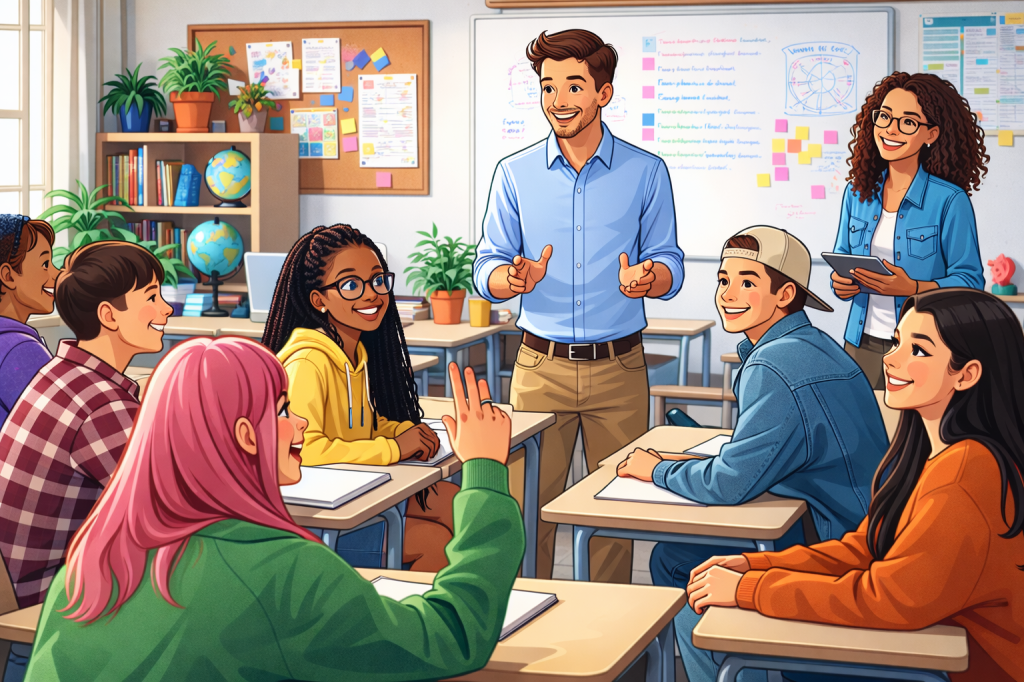
I’m not sure whether this is a frequently discussed subject in educational settings, but how often do we discuss the generational divide between students and teachers? Have we ever considered how that influences our way of thinking as adults?
Can we think of any circumstances in which our students humbled us by providing a new viewpoint on our rigid ideas? Our students may still be adjusting to life in the real world, but it is fair to claim that they occasionally notice or acknowledge things that we do not.
Their likes, dislikes, and preferences may differ significantly from those of the educators, yet they appear adaptable enough to recognize those distinctions. When we do not grasp their point of view, they do not allow prejudiced beliefs to cloud their judgement. Whether it’s Genz lingo, EDM music, or academic rules of conduct, they realize we’re different from them, but how far are we ready to go to learn why?
It may appear impossible to bring these two different worlds together for collaborative learning, yet each generation, young or old, that is open to new ideas, transforms every classroom into an effective learning space. Most educators grew up in an environment with little technology, where books and schools were the only sources of information, but students today grow up with technology all around them and an abundance of information to process. We may categorize this distinction as pre-digital versus digital, and how much technology has affected the way our students interact. Understanding their digital environment, which includes social media, online tools, and online learning, has proven to be a daunting effort, but many instructors are making the effort.
Our students have a variety of perspectives on many topics. It’s also because they’re incredibly conscious of everything around them from an early age, which makes them responsible. It is a difficult pill to swallow for all educators who may view teenagers as individuals who require guidance in making every decision in their lives. It was tough for me to comprehend that these students are far more well-informed and aware of cultural conventions than we were at their age.
Teenagers’ informal, quick, and digital communication sounds very different from the organized and formal communication that we are used to. It may appear absurd to us, but it is our responsibility to understand them and erase the communication barrier between us and the learners. It goes without saying that teens today are the most expressive when it comes to expressing any feeling they may have. Whether it’s suffering, enjoyment, or mental health. They don’t hold back. It appears to be uncomfortable for teachers because we are accustomed to traditional guru-shishya relationships in which conversing outside of classroom instruction was uncommon.
I believe we are gradually adjusting to a refreshing student mentor relation in terms of a safe space to express ourselves while learning. However, being brutally honest with teachers can occasionally backfire and appear impolite or disrespectful. It is admirable, however, that today’s teenagers have learned to set solid boundaries at a young age, allowing them to acknowledge their own worth and develop into strong personalities.
Reflecting on my teaching career so far, I’ve realized that each generation of teenagers has their own set of beliefs, influences, and ways of understanding the world that are shaped by the time period in which they grow up, challenging educators to constantly adapt, evolve, and find new ways to connect while remaining true to the core purpose of teaching.

 TEACHERS OFF THE SCRIPT